

Full-deck peel-and-stick
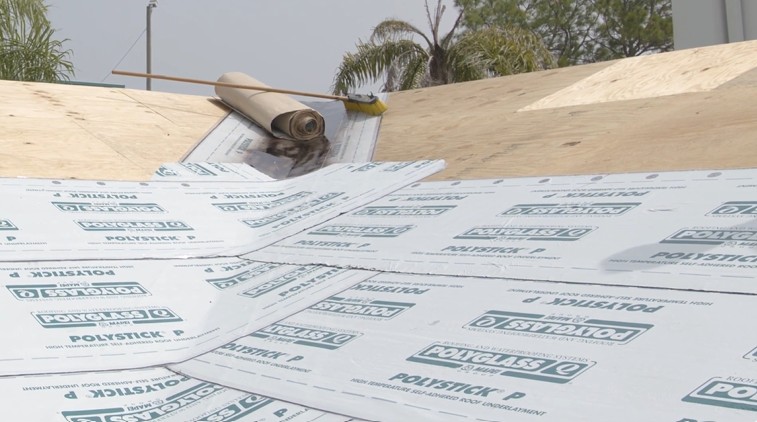
Self-adhering polymer-modified bitumen (ASTM D1970) bonded to the entire sheathing. Best water barrier if the covering leaves. Has to go on clean, dry wood — not on top of felt if you want the insurance credit.
Information
After Hurricane Ian, the covering leaving is not the only failure. Water through the deck is. This page is about what actually seals the wood — and what the insurance form will accept. It is a guide, not a product page.
Information
A sealed roof deck is a water barrier on the wood itself. Secondary water resistance (SWR) is the insurance term on Florida form OIR-B1-1802. They overlap. They are not the same as “we put underlayment on it.”
In a hurricane, shingles and tiles come off. What happens next is whether rain has a clear path into the attic through every plywood joint. Houses that kept a bonded layer on the deck often lost covering and still kept the interior. Houses that had only felt or a loose synthetic sheet often took water as soon as the nails pulled.
That is the point of a sealed deck: the covering is the primary roof. The layer on the wood is what you have left when the primary roof is gone.
Self-adhering polymer-modified bitumen (ASTM D1970) bonded to the entire sheathing. Best water barrier if the covering leaves. Has to go on clean, dry wood — not on top of felt if you want the insurance credit.
Four-inch self-adhering tape on every sheathing joint, then a synthetic or self-adhered sheet over the field. Seals the cracks the rain finds first. The tape is the SWR path; the sheet is still underlayment.
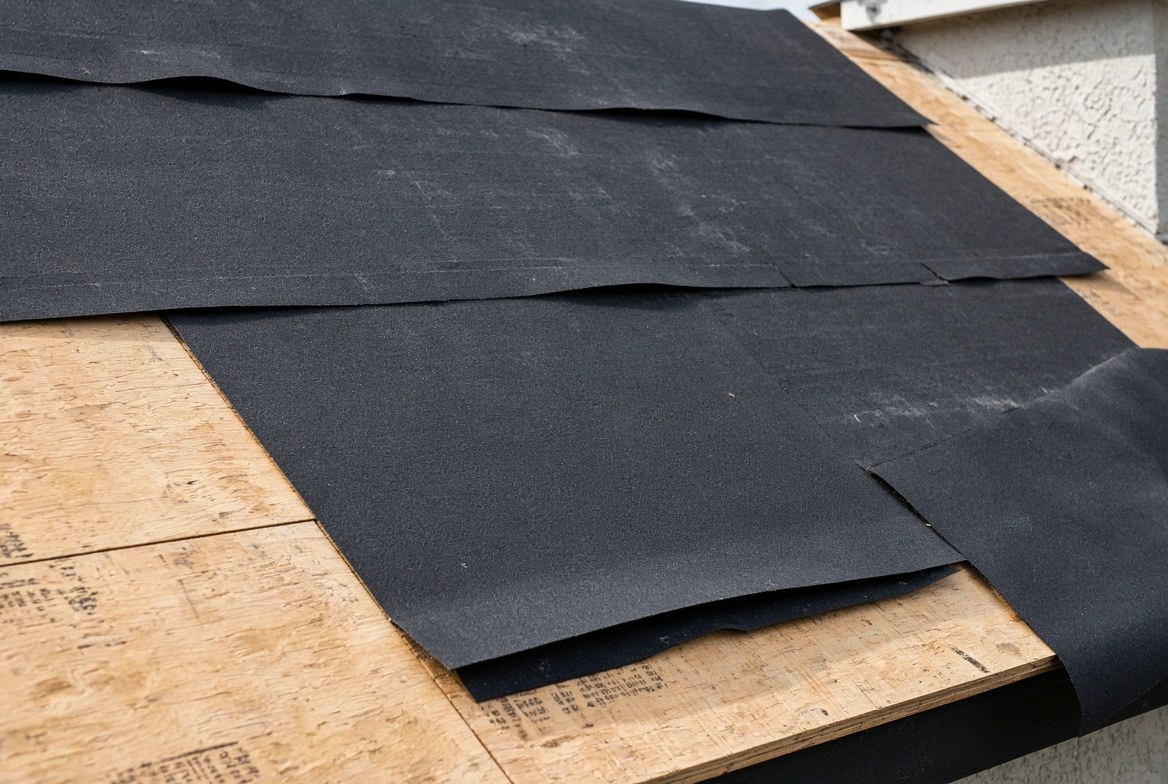
Two layers of asphalt-saturated felt. Common, cheap, and still used to meet some code minimums. It is not a sealed deck. It is not SWR on the wind-mitigation form.
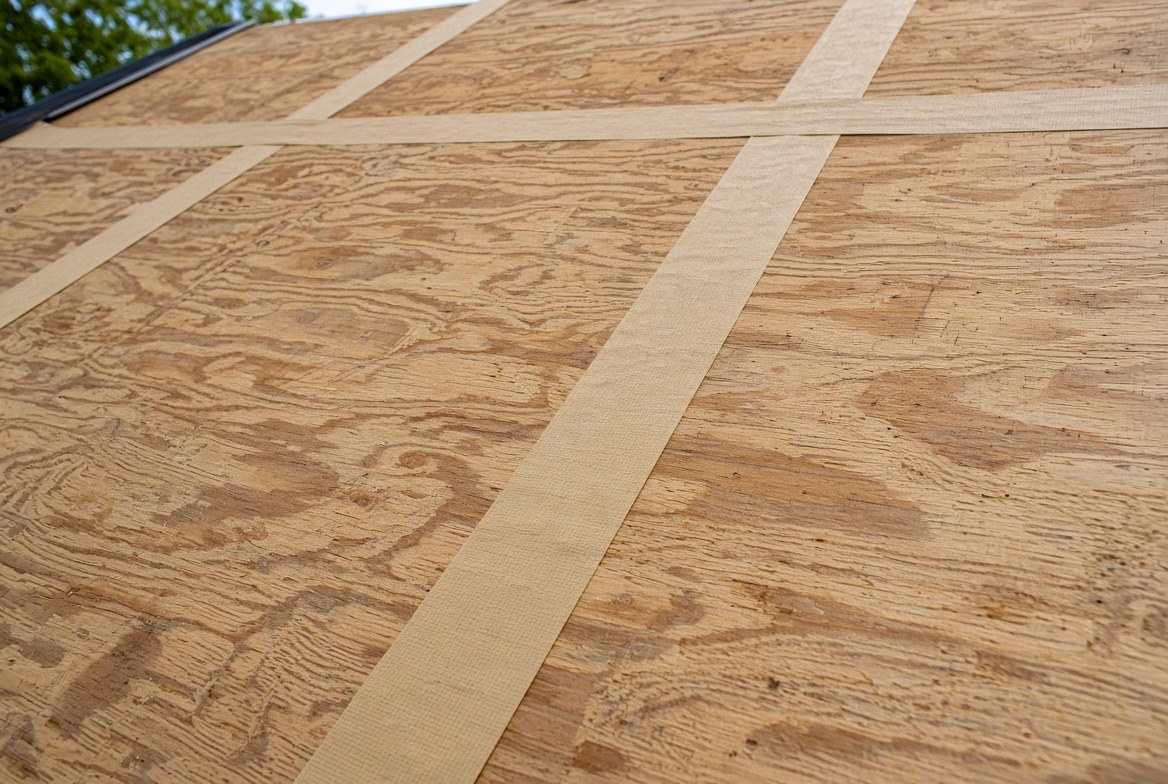
Form OIR-B1-1802 is narrow. Standard underlayments and hot-mopped felts are called out as not SWR. The two paths that inspectors will usually mark “SWR” are:
Peel-and-stick laid on top of felt is often a fine roof. It is a poor SWR credit. The form wants the membrane bonded to the wood. If you pull the sheet and felt comes with it, the inspector is looking at paper on a table, not tape on the deck.
Building code and the insurance form use the same words for different things. Passing inspection at the city does not automatically mark SWR on OIR-B1-1802.
Those labels get used as if they were the same rulebook. They are not.
A named zone in the Florida Building Code: Miami-Dade and Broward only. It brings its own roof chapter — product approvals, tests, and underlayment rules written for that zone. A “Miami-Dade NOA” or “HVHZ spec” is that chapter, not a nickname for any windy county.
A wind-speed map, not a county name. Where design wind is high enough that flying debris is assumed, glazed openings need impact protection or shutters. Cape Coral, Fort Myers, and the rest of Southwest Florida sit in this region. Roofs still have to be built for wind. They do not automatically fall under the HVHZ roof chapter.
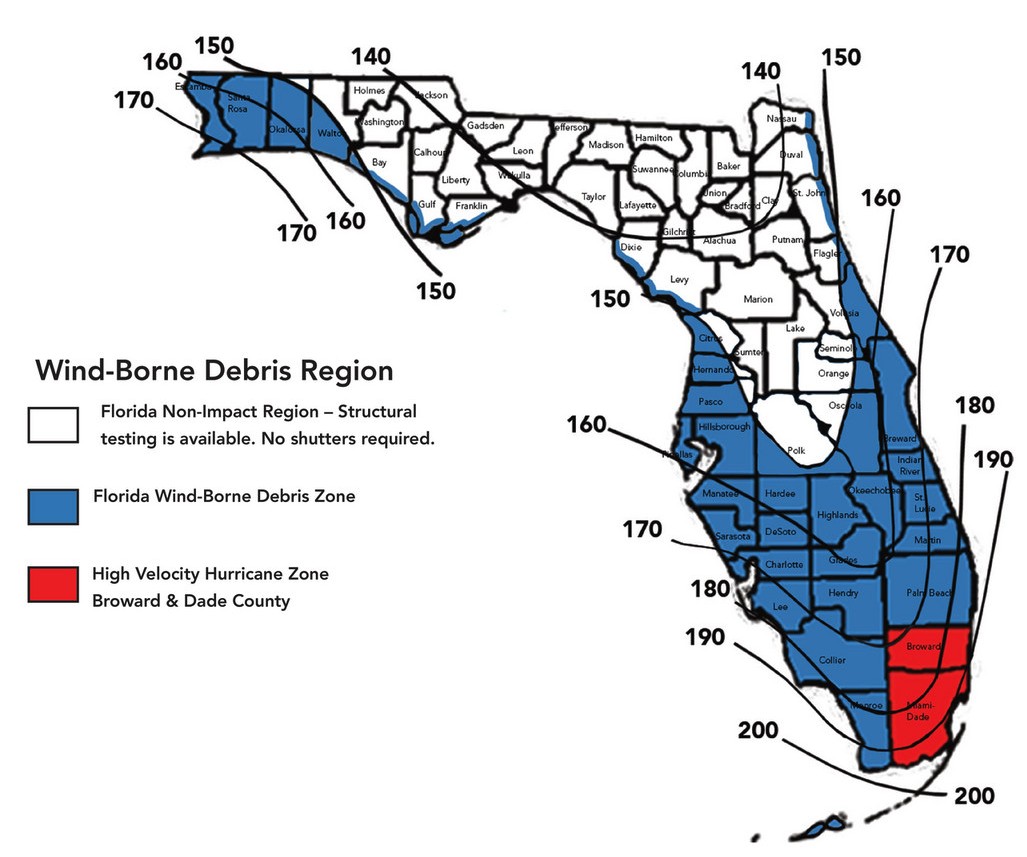
Practical difference on a bid: WBDR decides whether the windows and garage door have to stop debris. HVHZ decides a separate Miami–Broward roof rule set. Using HVHZ language on a Southwest Florida permit does not make the house safer by itself, and it does not mark SWR on the insurance form.
Quotes that sell “HVHZ spec” on a Cape Coral or Fort Myers house are either confused or selling a Miami product on a local permit. Ask which code path the permit actually uses. Then ask separately whether the underlayment is SWR on the insurance form. Those are two checklists.
Say it plainly.Cape Coral, Fort Myers, and the rest of Southwest Florida are Wind-Borne Debris Region. They are not HVHZ. Do not let a bid treat them as the same place.
Code sets a floor: keep water out while the covering is in place. Ian showed what happens when the covering is gone and the floor was only felt. The house can be legal the morning of the storm and open to the attic by afternoon.
If the goal is “the wood stays dry after the shingles leave,” budget for full-deck self-adhered or taped joints plus a sheet that belongs on that covering. If the goal is “cheapest permit,” felt will often get the stamp. Those goals are not the same bid.
Educational summary. Not a specification or a promise that any carrier will credit SWR. The inspector and the form in force on inspection day control the checkbox.
CGC1540882 · CBC059473 · CCC1330892 · CPC1458687
More notes