

Information
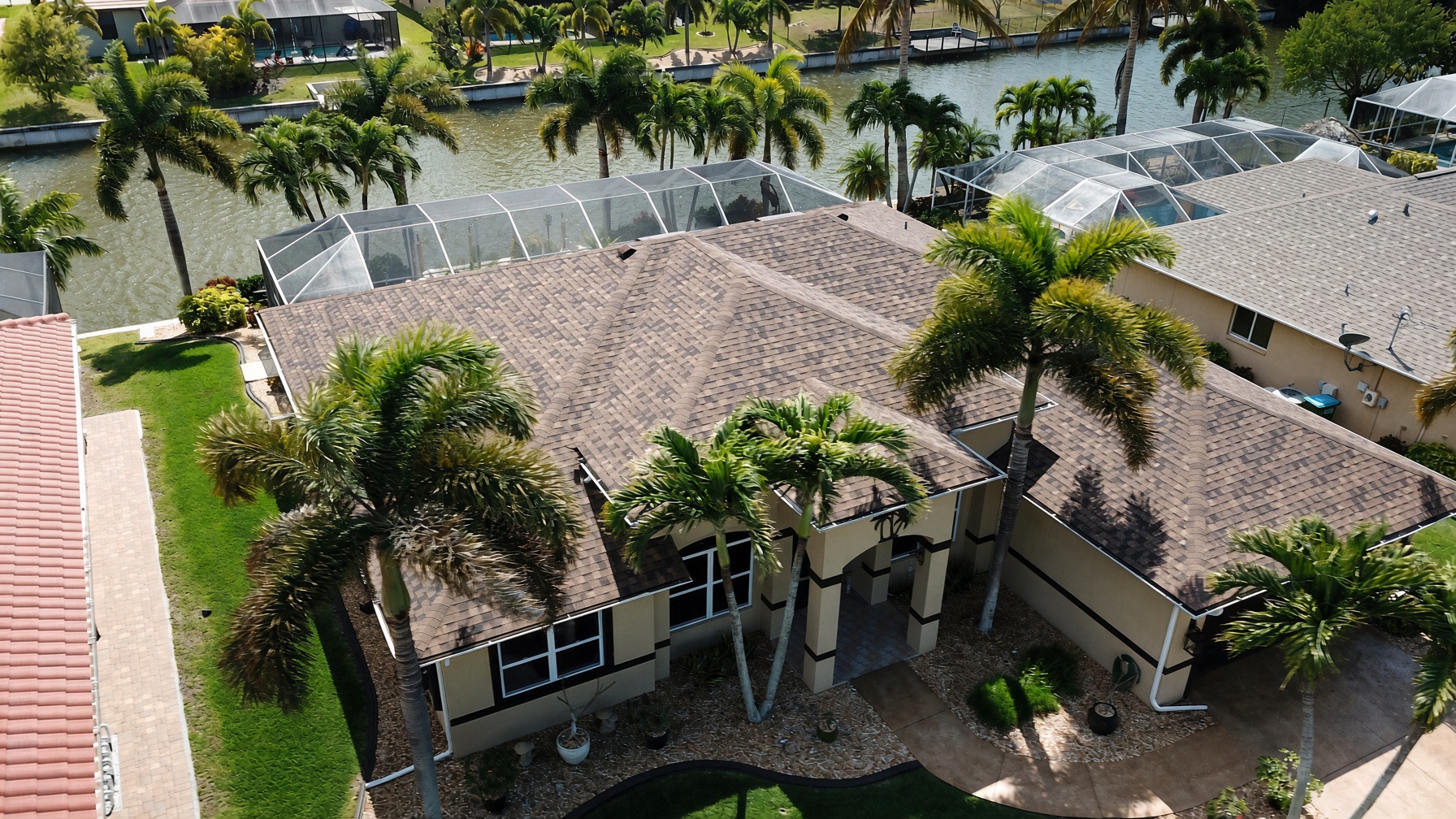
Solar on an existing Florida roof.
FarFan does not sell solar. A panel array is only as good as the roof under it. Age the covering first. Then talk about racks.
Information
The array will outlast a tired shingle. Plan for that.
1. Roof age before racks
If the shingles have ten years left and the array is warrantied for twenty-five, you will pay to pull the array, reroof, and put it back. Do that math before the first lag bolt. A roof that already needs work should be replaced or formally accepted as a short stack — in writing.
2. Penetrations and flashing
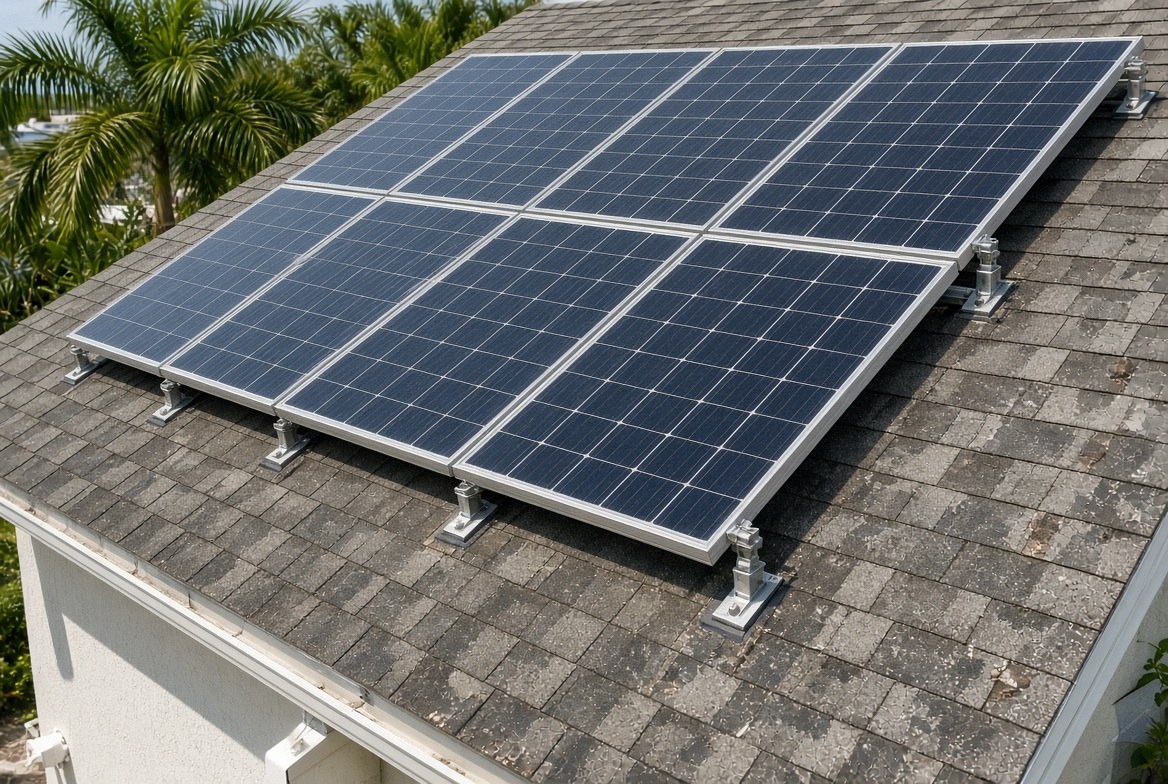
Every mount is a hole. Flashings have to match the covering — shingle boots are not tile flashings and not standing-seam clamps. Standing seam can often use non-penetrating clamps. Shingle and tile usually cannot. Ask how many penetrations, what flashing, and who seals around them.
3. Who owns leaks
After solar is on, the roofing manufacturer, the solar installer, and the original roofer will each point at the other. Get in writing: who is called first, who climbs, and whose warranty is paused by the racks. A leak under an array that nobody will touch is a common standoff.
4. Ask the insurance company before the racks go on
Solar can change how a carrier sees the roof. Some policies treat the array as a separate scheduled item. Some raise the premium. Some will not write the house at all if the roof is older and now has penetrations they did not underwrite. A few will refuse wind claims that start at a solar mount.
Call the agent with the address and the proposed layout before you sign. Get in writing whether coverage stays, changes, or needs an endorsement. Do not take the solar salesman’s reading of your policy as the last word.
5. Solar can affect the roof warranty
Many shingle, tile, and metal warranties assume an unaltered covering. Racks, lag bolts, and rail feet are alterations. Some makers keep the manufacturing-defect warranty and exclude leaks at penetrations. Some void the workmanship or wind portion once another trade fastens to the deck. A letter from the solar company is not the roof warranty.
Read the actual covering warranty and ask the roof manufacturer — not only the installer — whether this array keeps it in force.
6. Panels and roofs are usually different metals
Frames, rails, and clamps are typically aluminum. Flashings, fasteners, and standing-seam panels are often galvanized steel, galvalume, copper, or painted steel. In Florida salt air, dissimilar metals that touch — or share wet fasteners — can corrode each other. That shows up as stained panels, eaten flashings, and leaks at the mount years later.
Ask what the rails, clamps, and flashing are made of, and whether the solar spec isolates those metals from this roof. Especially on metal roofs.
7. What happens at reroof
The array comes off, sits, and goes back. That is a solar-crew cost plus a roofing-crew cost plus days the house is open. Ask the solar company now what they charge to uninstall and reinstall. If the answer is “we’ll see,” add a real number yourself before you sign.
8. Why a 15-year shingle under a 25-year array is a bad stack
The short-lived layer is underneath the long-lived one. You cannot replace the short layer without disturbing the long one. Either reroof first, or accept a mid-life solar removal as part of the solar price. There is no third option that keeps both warranties clean.
9. Questions to ask
- How old is this covering, and who inspected it?
- How many penetrations, and what flashing?
- Who owns a leak under a rail?
- Have you confirmed with the insurance carrier that this array does not change or cancel coverage?
- Does the shingle, tile, or metal warranty survive the racks?
- What metals are the rails, clamps, and flashing — and are they isolated from this roof?
- What is the written price to pull and reset the array at reroof?
CGC1540882 · CBC059473 · CCC1330892 · CPC1458687
More notes