

Roof guide · After a storm
How to check your roof for storm damage
After a hurricane or a strong storm, you can learn a lot about your roof without climbing on it. Here's what to look for from the ground, in the attic, and inside the house, and when to call a roofer.
Safety first
Stay off the roof
A wet or storm-damaged roof is slippery, and damaged decking can give way. Stay clear of downed power lines and anything touching the house. If water is coming in, move belongings away from it and call a roofer. See emergency roof repair.
From the ground
What to look for outside
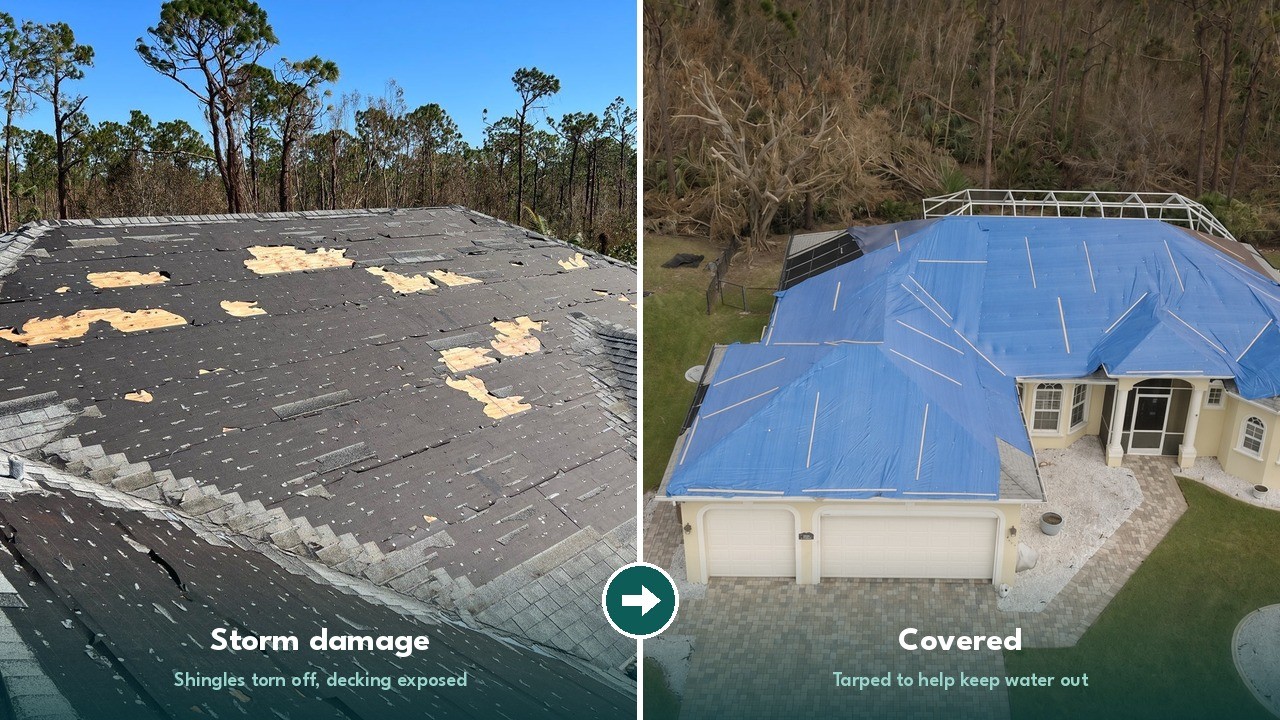
- Missing, lifted, or creased shingles, especially at edges, corners, and the ridge
- Cracked, slipped, or missing tiles
- Metal panels, ridge caps, or trim that have moved or bent
- Flashing pulled away from walls, chimneys, or vents
- Shingle pieces, tile fragments, or granules in the yard, gutters, or at downspouts
- Branches or debris on the roof, or a tree leaning on the house
Binoculars help. Walk all the way around the house. The side that faced the wind usually takes the worst of it.
Inside
What to look for in the attic and ceilings
- Daylight through the roof deck
- Wet or dark spots on the underside of the deck, or damp insulation
- New water stains on ceilings or walls, or bubbling paint
- A musty smell that wasn't there before
Take dated photos of anything you find, inside and out. They help a roofer see what changed and where water may be getting in.
What's next
When to call a roofer
Call if water is coming in, if you can see missing or moved roofing, or if the roof is older and took a direct hit. Some damage, like a shingle seal broken by wind or a cracked tile under a sound-looking row, is hard to see from the ground.
After a big storm, expect door-to-door roofing offers. Take a name and a license number, and check the license on the Florida DBPR license search before you sign anything. More storm-season notes are on our storm site.
How we work
Our process, step by step
01
Look
On-site check of the covering, flashing, vents, decking, and the attic where we can get in.
02
Photo report
You get photos of what we found, so you can see it yourself.
03
Recommend
Repair, Roof Shield Rejuvenation on a qualifying shingle roof, or replacement. We tell you which one we'd pick and why.
04
You decide
No pressure. If the roof has years left, we say so.
Questions we hear first
Yes. Strong wind can lift shingles and break the seal that holds them down, then let them settle back. They can look fine from the ground and still leak in the next storm. A close inspection can find it.
Book it
Not sure what you're looking at?
We work across Lee, Charlotte, and Sarasota counties, other areas on request. See Cape Coral roofing · Fort Myers roofing · North Port roofing · Roof guides.
Book a Roof Evaluation
Tell us the address and what you saw after the storm. We follow up to set up an on-site look.
Book a Roof Evaluation
We inspect first. If replacement is the better option, we will tell you honestly.